Ethnosports fest ends on high note
Ethnosports fest ends on high note
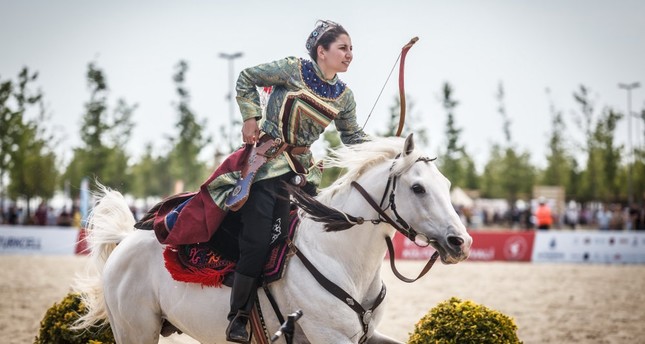
The four-day Ethnosports festival in Istanbul attracted a record 800,000 people, with officials anticipating a growing popularity around the country and the world in coming years
The Second Ethnosports Culture Festival held at Istanbul's Yenikapı Square concluded with a closing ceremony late Sunday. The four-day event saw various events linked to Turkic and Ottoman history and brought life to many traditions tied to Anatolia and Central Asia. The festival aimed to promote and revive sports and cultures unique to ancient Turkic life, with a total of 843 athletes competing in 11 different sporting categories.
Featured events included: Mounted archery, horseback riding, oil wrestling, gökbörü, aba wrestling, traditional Turkic and Central Asian sports and folk-music concerts.
In gökbörü or kökbörü, a traditional equestrian sport of Central Asia, riders on horseback try to catch a runaway goat by sliding on their saddles.
In belt wrestling, which has been popular among Crimean Turks for centuries, wrestlers try to put their opponent's shoulders on the ground by pulling on a belt wrapped around the opponent's waist.
As another unique sport originating from Central Asia, aba wrestling is one of the oldest wrestling forms in the world. To compete, wrestlers don an "aba," a coarse woolen cloth, while trying to beat their rivals in this rare and historic Turkic sport. In yet another Central Asian Turkic sport, mounted javelin, which was originally created for mounted combat practice, contestants try to hit opponents with javelins while on horseback.
In the 42 yurts set up in the 800,000 -square-meter venue, ancient rituals that have survived for centuries, such as the celebration of a child's birth, were performed.
Officials said around 800,000 people visited the festival grounds during the four-day festivities.
The World Ethnosports Confederation, headed by Bilal Erdoğan, the president's son, has been campaigning to promote ethnic sports for years and sees the festival as a major boost to keep ancient traditions alive.
Erdoğan said their aim was to revive "forgotten cultural values" and "rebuild national identity."
"Our confederation seeks to popularize traditional sports and to have them recognized in a world where cultural inequality is prevalent," he said.
The confederation's deputy chairman, Hakan Kazancı, who handed out medals to winners late Sunday, said, "We hope to make it a global event in the next five years, to promote the sports our ancestors favored and to turn the festival into a kind of Olympiad." Kazancı added that their federation aims to revive ancient forgotten sports around the world.
"This year, we had guest competitors from Kyrgyzstan, but it will be a more international event, on a global scale, in the following years," Kazancı said, adding that the number of visitors had increased by more than five-fold since the first festival. He said he hoped the momentum will translate into increased popularity, with similar festivals being held across the country. "We have venues in Kayseri and Gaziantep, and we are working on organizing similar festivals there," Kazancı said.
Kazancı said they had met their objectives in the festival, adding that its popularity had shown that the public was hungry for events that promoted traditional activities. "We are happy with the turnout. We selected one of the most easily accessible places as the venue, and it proved successful. The timing was perfect, too. The first festival was in August, but now we held it in May, which is during the school year. This was also reflected in the larger participation," he explained.
He said the World Ethnosports Confederation was founded in Kirgizstan in 2015, with its headquarters in Istanbul.
The confederation currently has 25 members around the world, he said. "For example, Qatar asked for an ethnic sport on horseback to be included among the games. We hope to do so next year. We aim to include all of the ethnic sports around the world that face extinction due to the pressure of popular sports," he explained
Ethno sports festival to revive ancient traditional sports
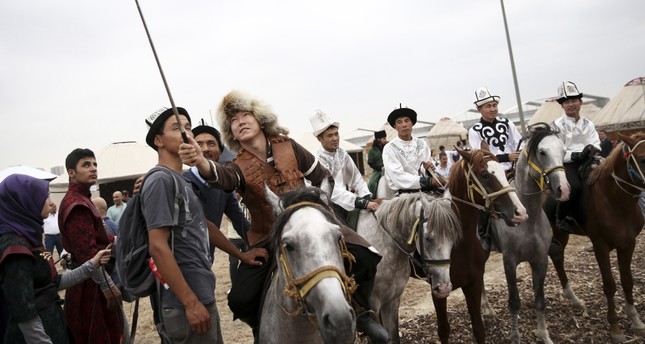
The World Ethnic Sports Confederation will host a three-day International Ethnic Sports Cultural Festival with 20 teams from around the world participating in 11 categories focused on sports that are unique to the Central Asian and Anatolian civilizations
The World Ethnic Sports Confederation will hold the Ethnic Sports Cultural Festival in Istanbul's Küçükçekmece district from Aug. 26 to Aug. 28. They will host 20 teams from around the world that will complete in 11 different branches of sport, including mounted archery, oil wrestling, javelin, "gökbörü" (catching a goat on horseback) and "mangala," a traditional Turkish mancala game. A total of 35 traditional Turkish nomad tents and a market place have been set up in a huge complex within the scope of the festival. Food stalls will offer traditional Central Asian and Anatolian foods and refreshments, and other venues will include workshops in traditional weaving, pottery and ornament-making for both children and adults who can learn about ancient traditions and pass on these timeless skills to future generations. Artwork created during these workshops will be put on display in exhibitions as well. A press conference was held yesterday at the Bezirganbahçe Square in Istanbul's Küçükçekmece district to discuss the upcoming festival. The conference was overseen by the President of World Ethno-sports Federation Bilal Erdoğan, Youth and Sports Minister Akif Çağatay Kılıç, Justice and Development Party (AK Party) Istanbul deputy and Chairman of the Archers' Foundation Haydar Ali Yıldız, Küçükçekmece Municipality mayor Temel Karadeniz, Başakşehir Municipality mayor Mevlüt Uysal, Association of Turkish Travel Agencies (TÜRSAB) Chairman Başaran Ulusoy, vice-president of the World Etno-sports Federation Hakan Kazancı, festival Art Director Yasin Tütüncü and members of the press.
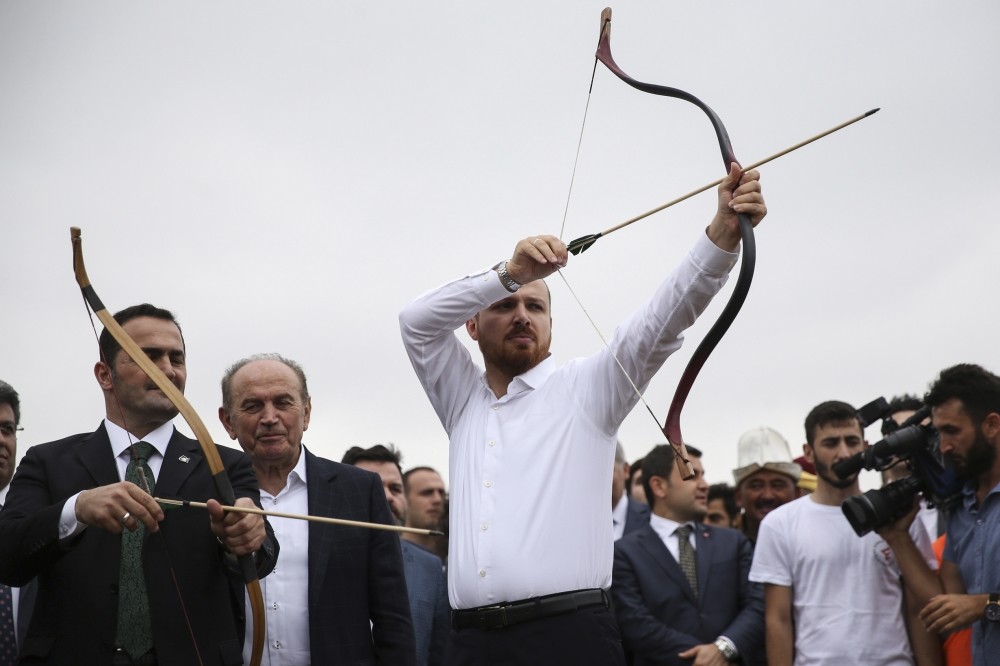
President of World Ethno-sports Federation Bilal Erdoğan shot arrows during his visit to the festival area after the press conference.
Bilal Erdoğan gave a briefing about the purpose of the festival and various events to be held, saying, "In efforts to popularize our traditional sports once again and bring these sports to our people, we shoulder the responsibility as the World Ethnic Sports Federation. While we attempt to revive these traditional sports, we also believe in the importance of this responsibility because we have distanced ourselves from our traditional values over the last 150 to 200 years. We thought that we need to revive our culture and build upon it; not only in the field of sports but also culture, art, music and cultural garb since we have a very ancient cultural background. We need to raise future generations that know about the arts that were once improved upon by our forefathers. We have 1,000 years of history in these lands [Anatolia] and thousands of years of history in Central Asia. We will be able to build a happy and peaceful future once we can lay our claim on the values that we inherited from our past in these lands," Erdoğan said.
Erdoğan stressed the importance of the resistance against the failed coup attempt on July 15, saying: "We lost our self-esteem as, in the past, values were imposed on us that do not belong to our culture. However, the Turkish nation showed their will to build their own future by standing against the failed coup attempt."
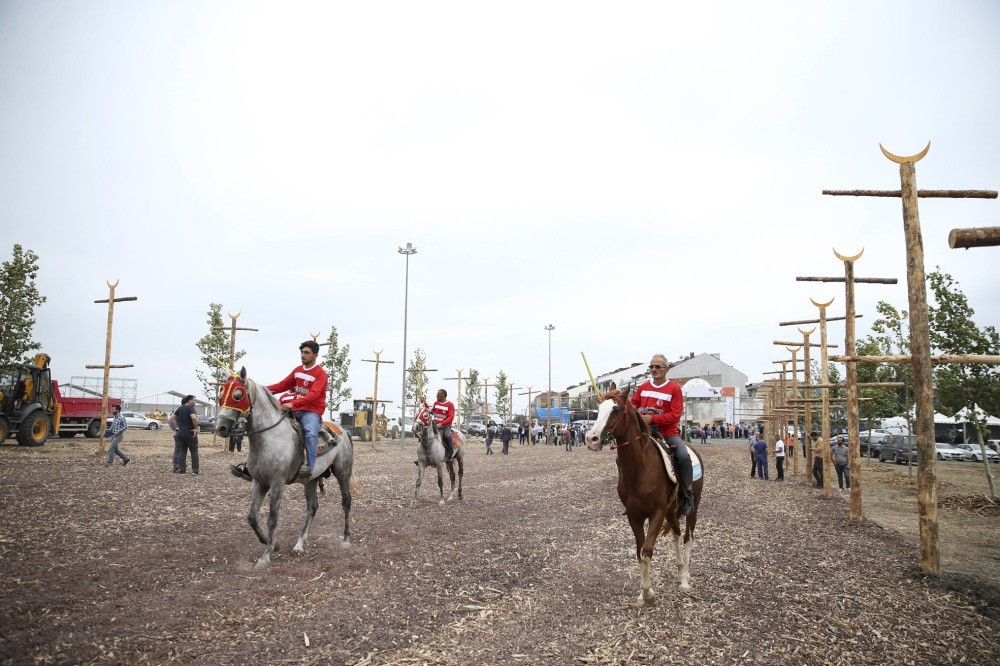
Erdoğan went on to talk about the effects the festival is expected to have on cultural development. "We believe that that this event will pave the way for the revival of our own culture, which had been neglected under the shadow of the Western vulture and pushed to the background, by promoting our sports, the culture of the arts and culinary culture. We have organized a huge festival covering a 850-square-meter area that features authentic tents, food stalls, activity areas for children and live performance stages. This will be a festival where families can spend time together. It is important to bring up a generation that learns the arts produced by their forefathers. The pioneering steps to revive our values will be taken for the children who learn to play the instruments unique to our culture and take up traditional sports such as archery. It is evident that cultural elements that are symbolic have played an important role in huge political moves, plots and financial gains. Hence, it is clear that these cultural elements are more than just symbols of sports and culture. The interest that the Turkish people show in TV programs which focus on our own traditional sports and arts is evidence that people want to see Turkish culture be revived. Thus, it can be said that the Turkish nation expects to reunite the cultural values which have been imprinted in their genes with modern life. During the festival, people will have a chance to examine dervish tents, archery activities, aşık and mangala games as well as kökbörü and mas wrestling. We invite everyone to Küçükçekmece tomorrow starting at 11 a.m. We also will ease the transportation problem with shuttles that run every hour, on the hour. The Yavuz Sultan Selim Bridge will also be inaugurated on the same day. We welcome everyone both to the inauguration of the third Bosporus Bridge and to the Etnosports Festival," he concluded.
AK Party Istanbul deputy and the chairman of the Archers' Foundation, Haydar Ali Yıldız, spoke to members of the press and said: "Our understanding of politics, as well as sports, is aligned with civilization. We have a responsibility to pass down the values of our civilization to future generations, regarding our history, geo-political history and geography. This is what we are doing as a part of the Ethno-sports Festival. At the Archers' Foundation, we offer activities to promote, develop and introduce archery to large groups of people. We embarked upon a task to improve this sport of our ancestors, which is also a national sport. Under the leadership and auspices of President Recep Tayyip Erdoğan, we witness the apprehension, construction and recovery process of a civilization."
Minister of Youth and Sports Çağatay Kılıç, on the other hand, noted, "We need to protect our cultural heritage and tradition. The sports we refer to as 'traditional' ones have fallen into oblivion but will now have a chance to present themselves thanks to this organization." Stressing that all types of sports should be featured in the media, Kılıç said that they have begun working on the infrastructure of the revival of the traditional sports and there will be many organizations within this framework.
TRADITIONAL TURKISH SPORTS TO BE PROMOTED WORLDWIDE

Source : Daily Sabah
Detail : original text
Turkish Traditional Sport Branches Federation President Hakan Kazancı announced that their primary target was to promote Turkish traditional sports in a way so that they can contribute to the world's sports culture
The Turkish Traditional Sport Branches Federation (GSDF), under the guidance of its newly elected President Hakan Kazancı, is aiming to promote Turkey's traditional sports globally. In an interview with local press members, Kazancı stated that their primary target was to support the growth of Turkish traditional sports on a local and international level.
"We want to promote traditional sports branches that are under the federation's umbrella, on both the local and international level in order to secure their future, and build their reputations. We want to create opportunities to popularize these sports that belonged to our ancestors, and raise them to a level so that they can contribute to the global sports culture," Kazancı said. He stressed that sportswear unique to the traditional sports were to be reviewed in order to consolidate the tie between the traditional patterns and traditional sports.
"We are also planning to help out clubs by providing sports materials and outfits, and hold programs to encourage establishing more clubs," Kazancı added.
"However, as our main target is to promote our traditional sports globally we want to standardize the rules of our traditional sports with countries that have similar traditional sports and then establish an international traditional sports federation," the GSDF president said.
Confirming that more importance would be given to building new traditional sports facilities, Kazancı said, "We are planning to build new facilities where our traditional sports would be practiced and performed. We will also continue our 'Cirit Ligi' (Jereed League) that started last year. We are also planning to organize 'Shalwar and Belt Wrestling' leagues for the first time."
Cirit also known as Jereed, is a traditional Turkish equestrian team sport, played outdoors on horseback in which the objective is to score points by throwing a blunt wooden javelin at the opposing teams' horsemen. Played by Turkic peoples in Central Asia as an essential sporting and ceremonial game, it was brought to Anatolia during the westward migration in the beginning of the 11th century.
Kazancı confirmed that there were plans to organize the third World Nomad Games in Turkey. The first two events were held with the support of World Ethnosport Confederation. The World Nomad Games are an international sporting competition, dedicated to ethnic sports practiced in Central Asia.
The main participating were Kyrgyzstan, Kazakhstan, Azerbaijan, Uzbekistan, Turkmenistan, Tajikistan and Russia (especially the Sakha, Buryatia, Altay, Kalmykia, and Bashkortostan republics) as well as other countries like Mongolia, Turkey, and Afghanistan.
"The World Nomad Games are accepted as the Olympics of the Turkic World. We have come to a mutual agreement with member countries to hold the event in Turkey. If our ministry and the general management approve, it will be held in our country," Kazancı said. Talking about the GSDF, its newly elected president said, "There are eight traditional sports
http://www.dailysabah.com/sports/2016/12/29/traditional-turkish-sports-to-be-promoted-worldwide

ABA GÜREŞİ
Türkiye

AŞIK OYUNLARI
Kırgızistan

ATLI CİRİT
Türkiye

ATLI OKÇULUK
Türkiye

KÖKBÖRÜ
Kırgızistan

KUŞAK GÜREŞİ
Türkiye

MANGALA
Türkiye

MAS GÜREŞİ
Türkiye

ŞALVAR GÜREŞİ
Türkiye

YAĞLI GÜREŞ
Türkiye

YAYA OKÇULUĞU
Türkiye
https://mail.worldethnosport.org/tr/spor-dallari

1.Etnospor Kültür Festivali

Etnospor Kültür Festivali Teaser 2
18-04-2017 | 1625 Görüntülenme

1.Etnospor Kültür Festivali
Dünya Etnospor Konfederasyonu tarafından İstanbul, Küçükçekmece ilçesi Bezirganbahçe meydanında 26-27-28 Ağustos tarihlerinde Etnospor Kültür Festivali düzenlendi. Etnospor dallarından bazılarını toplum ile buluşturmak ve tanıtmak, bu sporların profesyonelleşmesini sağlamak ve aynı zamanda kültürel değerlerimizin yeniden hatırlanması adına oldukça kapsamlı bir etkinlik olan festival; katılımcı ve seyirci sayısı itibari ile Türkiye’de bir ilk olma özelliği taşıyor. 800 bin metrekarelik alanda düzenlenen, on bir spor dalında 508 sporcunun katıldığı festivali İstanbul’un ve Türkiye’nin dört bir yanından gelen yaklaşık 200 bin kişi ziyaret etti.
Dünya Etnospor Konfederasyonu Başkanı Bilal Erdoğan’ın konuşmaları, ardından atlı gösteriler ve tören kortej yürüyüşü ile açılışı yapılan festivalde, alanda kurulan 1500 metrekarelik namazgâhta Cuma namazı toplu hâlde kılındı ve derviş duası akabinde tüm etkinlikler başladı. Etnospor Kültür Festivali kapsamında müsabaka ve yarışma şeklinde gerçekleşen sportif faaliyetlerde atlı cirit, atlı okçuluk, kökbörü, geleneksel hedef okçuluğu, menzil okçuluğu, yağlı güreş, kuşak güreşi, aba güreşleri, şalvar güreşi, mangala, aşık oyunu ve mas güreşi oyunları yer aldı. Ayrıca, atlı oyunlar sahasında Kırgızistan’dan gelen atlı akrobasi ekibi nefes kesen gösterileri ile halkı büyüledi.
Bölgesel çadırların yanı sıra, alanda toplam kırk üç kıl çadırda Türki Devletler ve topluluklar, okçular çadırı, Diriliş Ertuğrul ve derviş çadırı yer aldı. Oba yaşamının tüm yönleri ile sergilendiği bu çadırlar içerisinde el dokuma halılar, kilimler, dokumalar, eski ve antika kültürel malzemeler sergilendi ve bu sayede seyirciler eski oba yaşamını İstanbul’un merkezinde yaşama fırsatı buldu. Özel süslemeleri ve dekorları ile obanın ortasında yer alan büyük han çadırı festivale gelen misafirleri ağırladı. Oba meydanında icra edilen eski usule göre gelin gelme toyu ve bebek toyu izleyicinin büyük ilgisini topladı.
Anadolu’nun kadim kültürel zenginliklerini göstermeye yönelik yedi bölgemizden yedi kültürel çadır; içerisindeki bölgelere has el sanatlarını, müziklerini ve yöresel lezzetlerini seyirciler ile buluşturdu.
Geleneksel el sanatlarımız için kurulan el sanatları çarşısında otuz farklı ürün dalında zanaatkârlarımız hünerlerini yerinde sergiledi.
Oyma ahşap işçiliğinden çömlek yapımına, keçe yapımından tesbih üretimine birçok el emeği ürüne dönüştü. Tarihsel geçmişi ve geleneği ile sergilenen el sanatlarının bazıları ustalar yardımı ile seyircilere yaptırıldı. Bu anlamda, el sanatları çarşısının interaktif yönü, seyirciye sanatları yerinde deneyimleme fırsatı sunmuş oldu.
İnsanların ailecek gelip gönül rahatlığı ile katıldığı, kendi sportif ve kültürel değerlerimiz ile keyifli vakit geçirmenin ayrıcalığını yaşadığı, daha önce adını bile birçoğumuzun bilemediği kendimize ait oyunları tanıma fırsatının sunulduğu Etnospor Kültür Festivalinde Okçular Tekkesi’nden uzman eğitmenlerin gözetiminde geleneksel okçuluk atış talimi yaptırıldı. Yine uzman eğitmenler eşliğinde yetişkinlere ve çocuklara yönelik at binme ve sürme aktiviteleri de festivalde yer aldı. İstanbul’un merkezinde yapılan tüm bu aktivitelerin içerisinde aynı zamanda bölgesel halk oyunları, kılıç kalkan gösterileri, mehteran gösterileri, Orta Asya-Anadolu mutfağından zengin yiyecek-içecek seçenekleri halkımızla buluştu.
Uzman eğitmenler eşliğinde yetişkinlere ve çocuklara yönelik at binme ve sürme aktiviteleri de festivalde yer aldı.
2.Etnospor Kültür Festivali

Ok Yaydan Çıktı
11-05-2017 | 1640 Görüntülenme

2.Etnospor Kültür Festivali
Yoğun bir katılımın gerçekleştiği 1. Etnospor Kültür Festivali’nin ardından bu sene “Ok Yaydan Çıktı!” sloganıyla 2. Etnospor Kültür Festivali’ne hazırlanıyoruz! Görkemli bir açılışla merhaba diyecek 2. festival 4 gün boyunca birbirinden farklı etkinlikler gerçekleştirilecek. Sportif faaliyetler, kültürel aktiviteler, konser, mehteran gösterisi gibi çeşitli eğlenceler, Orta Asya-Anadolu mutfağından zengin yiyecek-içecek seçenekleri ile birlikte pek çok sürpriz ziyaretçilerimizi bekliyor olacak. 2. Etnospor Kültür Festivali 11-14 Mayıs tarihleri arasında Yenikapı Meydanı’nda olacak!
ETNOSPOR KÜLTÜR FESTİVALİ'Nİ TANIYALIM!

- Where I am :
- Culture
- Games - Sports
Traditional Sports
The sports in this section are largely variations of wrestling (aba wrestling, grease wrestling), horse race, jereed, camel wrestling, bullfighting, cockfighting, hunting etc.
Jereed was very popular all over Anatolia 50-60 years ago, although today it is only seen in some parts of the Kars- Erzurum region and in the Aegean. The great interest felt by Turkish people in horse rising, and their considerable success at it, turned first into an entertainment and later into a sport. The jereed was a kind of a javelin game played either on horse or on foot, although today it appears as a cudgel. The mounted variation is played with two teams, each consisting of ten people. Riders throw the jereed while approaching each other at the gallop. Avoiding the jereed, and particularly catching it in mid-air, earns a score. When or how to throw the jereed is pre-determined. The game is played by men, and generally performed at weddings, on special days or at fairs.
https://www.kultur.gov.tr/EN,98583/traditional-sports.html
Bullfighting (Kafkasör)
 Artvin, with its unique Kafkasör bullfights which offer scenes of breathtaking excitement, as well as its other festivals and feasts, is a region that should on no account be missed.
The most interesting part of the festival held on the third week of June every year is the bullfighting. Bulls from all parts of the province are classified according to the thickness of their necks or weight, and pitted against one another.
Bullfights (2.2 MB)
Certain rules have been applied since the bullfights first began in order to protect bulls from injury and suffering. When the weaker bull withdraws from the arena, that defeat is accepted and it is taken out of the arena by the people in charge. In this way, Kafkasör bullfights have become an atmosphere of sports and entertainment with their own rules.
This type of bullfight is unique, and a defining characteristic of the whole region.
Many people from the neighborhood come to join in the festival, at which there are also Karakucak wrestling and folk dances as well as minstrel poets.
The book ARTVIN 2000 published by the Artvin Governorship of Artvin with the assistance of the Artvin Regional Development and Service Foundation was used in the preparation of this section.
Camel Wrestling
It is said that the first camel wrestling competition was held in the village of Hidirbeyli in Aydin’s Incirliova township about two centuries ago. However, A. Münis Armağan gives a different account in his book Batı Anadolu Tarihinde Ilginç Olaylar (Interesting Incidents in Western Anatolian History), in the chapter on the “End of the Camels.” Armağan writes that camel wrestling was done in the time of Mahmut II, in Tire and its surroundings.
Although the origin of camel wrestling cannot be placed exactly, it is believed that it started during nomadic times. People interested in camel wrestling or camel owners say that the nomads used to have their camels wrestle as part of the competition between caravan owners.
Today, camel wrestling is popular mostly in Aydin. It is also seen in the cities of İzmir, Manisa, Muğla and Denizli in the Aegean region, Balıkesir and Çanakkale in the Marmara region and Burdur, and İsparta and Antalya in the Mediterranean region.
Although camel wrestling has certain rules, these rules may vary from area to area. Unlike other sports, camel wrestling does not require a special field or spectators. Most of the time, organizations active in areas such as education, culture, health, sports or social welfare hold camel wrestling competitions as fundraisers. In some areas, municipalities also help to organize the event so as to bring order and discipline to the competitions.
The proceeds earned from camel wrestling, after costs are deducted, are used for certain purposes. Neither parimutuel arrangements nor betting are allowed. Only male camels can wrestle in these contests, and then only those born to female camels with a single hump (dromedary or “yoz” camels) or those with double humps (Bactrian or “buhur” camels). As a class, these wrestling males are called “tülü” camels. These camels are bred especially for wrestling, which means that the ancestors of these wrestling camels were wrestlers themselves.
These camels are bred with a great deal of care and are trained for wrestling. The contests are held in the winter months of December, January, February and March when the tülüs are in heat. Every wrestling camel must have a name. Sometimes the camel’s owner gives it a name, and sometimes the spectators find a name for the camel inspired by how it behaves during wrestling matches. Some camels are named after popular characters from TV shows, such as American detective Columbo and Şahintepesi. Other examples of camel names are Dozer, Gezer, Sarizeybek, Yörükali, Almanyali, Ceylan, Felek, Ali Tülü, Talanci, Karka Kartali, Suat, Zümrüt, Menderes, Firat, Takmakol, Şoför, Civan, Karamurat, and Yarimdünya.
The name of the competing camel is written on a piece of embroidered cloth called a peş hung behind the saddle, which is called the “havut.” Beneath the camel’s name is written the word Maşallah (May God protect him).
One day before the wrestling contest, the camels are decked out in a manner prescribed by tradition. They are then walked through the streets accompanied by music played on the drums and zurna. This is a spectacle which everyone should see at least once. When you come into the town before a tournament, you can hear the zeybek music played with the drums and zurna and the sounds of bells dangling from the camels. The dressed-up camels are worth seeing. You could never tire of watching them. The entire town takes on a carnival atmosphere. Large crowds gather in front of the kahvehanes, the tea houses where men (but not women) go to play cards or backgammon. Camel wrestling fans get involved in boisterous discussions about the camels set to compete.
The camel owners are easy to spot due to their distinctive dress: cornered caps, traditional scarves around the neck, jackets, special trousers and accordion-like boots. Some camel wrestling enthusiasts who don’t actually own camels also dress in similar outfits. Some fans sit around TV sets to watch earlier wrestling contests which were videotaped. On the evening before the camel wresting contests, a “Hali Gecesi” (Rug Night) occasion is held with the attendance of camel owners and other guests. This is the sort of festivity where people meet new friends and old acquaintances strengthen their bonds of friendship. They eat, drink, sing songs native to their particular region, dance, entertain their guests and also sell rugs at an auction. This “Hali Gecesi” is definitely organized on the night before the wrestling. People prepare food beforehand and they eagerly await the wrestling competitions the next day.
The day of wrestling
In the wee hours of the meeting, crowds of people start flocking to the wrestling field. While the camel owners try to find a good spot in the fields where their camels can face each other off, those who want to watch the matches grab good place for themselves and their families. They cook meat on a barbecue spit. By about 9 or 10 o’clock, the camel wrestling fans have filled the field. Street sellers set up their stands and tables around the field where they offer a wide variety of food, drinks and souvenirs, while drummers and zurna players play traditional tunes. Inspired by the music, some people dance the traditional zeybek dance.
During all this hullabaloo, loudspeakers blare the names of the camels set to compete, thus signalling the beginning of the contests proper. Now the activity around the field moves to focus inside the field of competition. Camel owners bring their camels into the wrestling area. First the camels walk a lap around the field, after which they start wrestling usually between 9 and 10 o’clock.
The cazgir – the person who announces wrestlers or, in this case, the wrestling camels – calls out the camels’ names. The cazgır reads poems praising each camel, adding color to the contest. This cazgır, just as in two-legged wrestling contests, is the most important and colorful person in the competition. He treats the camel wrestling match just like a sports announcer acting as commentator to a soccer match.
Within the wrestling organization, there is a refereeing council formed by a chief referee, middle referee and table referee, as well as an urgancı (a person who deals with ropes), people responsible for tying camels’ mouths, and a person who checks the camels’ mouths after they are tied.
Camel wrestling is held in four categories, namely Foot, Middle, Under the Head and Head.
A camel can win in any of three ways:
-by making the other camel retreat,
-by making the other camel scream,
-or by making the other camel fall.
In the first road to victory, one camel sends his rival into retreat with just his fearsome appearance.
In the second, one camel overpowers the other so much that he makes him scream.
In the third, one camel cunningly maneuvers the other to make him fall down. The winning camel goes and sits on his vanquished competitor.
Another way to victory can be secured is when the camel’s owner takes his fighter out of the contest in order to prevent him from being hurt. The camel owner throws a rope on the ground indicating that he is withdrawing from the contest. The other camel is declared the winner. And sometimes the game ends in a tie.
Below are some terms used to refer to tricks and maneuvers employed during wrestling: Bağ, Çengel, Çatal, Makas, Kol Atmasi, Muşat Çengel, Tam Bağ, Yarim Bağ, Düz Çengel, Tekçi, and Kol Kaldirma.
The contest’s of organizers are try to pit camels who excel at different tricks to make the matches more exiting. Every camel wrestles with a tülü from his own class. Camels that wrestle from the right are called “rightist,” camels that wrestle from the left are called “leftist,” camels that trip the other by using foot tricks are called “çengelci,” camels that take their rival’s head under their chest and then try to sit are called “bağci,” and camels which push their rivals to make them beat a retreat are called “tekçi.”
The winning camel stands with his four feet together and greets the audience in a proud, boastful manner. He accepts a rug as his award and then exits the wrestling field. The camel which loses, on the other hand, look embarrassed and keeps quiet.
A camel wrestles just once per day and each wrestling match lasts for 10 or 15 minutes. These rules exist to prevent the camels from being too badly hurt or even dying as well as to protect their well-being.
The games are conducted both with discipline and a strong nod to tradition. At the end of the contest, the owners of the winning camels and their trainers (sarvan) look joyful ,and camel wrestling fans return to their homes with the satisfaction of having watched exciting camel wrestling matches all day long.
The camel wrestling contests that are usually held during winter in the Aegean region have become winter festival there.
Camel wrestling (5.4 Mb)
Kırkpınar Wrestling
The History of Kırkpınar
Various stories are told to explain how Kırkpınar wrestling started some 641 years ago. The following tale is the one most widely told:
In 1346, during military expeditions led by Orhan Gazi to conquer Rumelia (the part of the Ottoman Empire which lay in Europe), his brother Süleyman Paşa marched with 40 soldiers to Domuzhisar, which was then in the hands of the Byzantines. They raided and conquered the Domuzhisar, or Domuz Fortress. After also conquering other fortresses, the group of 40 soldiers who formed the advance guard returned, and they came to rest in Samona, which is today in Greece. There, these 40 soldiers began to wrestle. After hours of wrestling, two brothers named Ali and Selim both proved unable to defeat the other. On a Hidrellez day (a festival held on May 6 to celebrate the beginning of summer), these two brothers started wrestling again. The wrestling match lasted the entire day but still neither man could defeat his brother, so the contest continued throughout the night illuminated by candle and torch light. At the end, however, both of the brothers ran short of both breath and energy and so they died.
At the spot where the two men had perished, where there was a fig tree, their friends laid them to rest. Then many years later they came to visit the tree. At that very place where the two brothers were buried, they found a great river flowing. Following this, the people of the region start calling the area “Kırkpınar” (Forty Springs). This was at the green pastoral area of the Greek village of Samona. At the end of the Balkan wars and World War I, the Kırkpınar Wrestling Contest started to be held at the place called Virantekke, which is located between Edirne and Mustafapaşa. After the foundation of the Turkish Republic, since 1924 the contests have been held in Edirne’s Sarayiçi area.
Until 1928, ağas (landlords) organized the Kırkpınar Wrestling Contest and they entertained the guests and gave awards to the winners. However, due to economic troubles in the country, people became reluctant to volunteer to become agas. So, starting in 1928, the Turkish Red Crescent (Kizilay) and the Child Protection Society (Çocuk Esirgeme Kurumu) took over the duties of putting together the wrestling contests.
In 1946, the Edirne Municipality started organizing the Kırkpınar Wrestling Contest, and in this year also Edirne Mayor Tahsin Şipka added the contest’s organization to the municipality’s official duties.
Kırkpınar Wrestling 5.5 Mb)
Kırkpınar Wrestling (760 Kb)
Kırkpınar Wrestling (2.1 Mb)
Pehlivan
“Pehlivan” is a Persian word normally meaning brave, but it also has a number of secondary meanings: officer, governor, a physically large man or a person who tells the truth. Throughout history the word has been used with a variety of meanings. The Seljuks used to employ the word to refer to heroic warriors, accomplished shooters and wrestlers. In the 16th century, it was used exclusively for athletes, and this practice continued to the end of the reign of Sultan Mahmut II.
The entire Turkish nation, including women and children, loves wrestling, and they respect wrestlers for their roots in the culture of warriors and heroism. People love pehlivans because they are physically stronger than everyone else, as well as muscular, healthy-looking, and brave, and because they have strong characters and you can trust their word.
In Ottoman times, wrestling contests were held as a part of festivals and weddings or as a way to raise funds for groups promoting social welfare.
The game of Jereed
 Jereed, or “çavgan,” is a traditional game which has been played by Turks for many centuries. Turks brought this horse-riding game with them in their journey from Central Asia to Anatolia. For Turks, the horse was both sacred and indispensable. All the days of their lives were spent in the company of horses. Koumiss (kimiz), which means horses’ milk, was their staple drink.
For the Turks, jereed was both a great ceremony and a sports competition. Later, in the 16th century, it came to be considered a war game by the Ottoman Turks. In the 19th century, it became the largest sports show and game of the Ottoman state and its palaces. Mahmut II banned jereed in 1826 for its status as a dangerous game. But despite this, the game continued to spread to all the parts of the empire as an important Ottoman war game.
Until 40 or 50 years ago, the game was still widely played across Anatolia, but later its scope shrank to only the areas of Balıkesir, Söğüt, Konya, Kars, Erzurum and Bayburt. And now, for over two decades, the game has retreated across the sands of time into only Konya and Balikesir.
Yet to this day, almost everywhere around the country, young men in villages continue to play jereed on the occasions of weddings and holidays. This sport, along with wrestling, continues to be a contest of bravery in all corners of Turkey. The zurna, a reed instrument something like an oboe, is played along with drums at the jereed field to grab people’s attention.
The tradition of jereed is still alive in Iran, Afghanistan, Turkmenistan and other Asian countries inhabited by people of Turkish origin.
Today in Turkey, the game is still played on the second Sunday in September in Söğüt at the Ertuğrul Gazi (veterans’) ceremonies and in Erzurum, Kars and Bayburt to mark various other occasions.
In 1972, a Jereed Festival was organized in Konya by the Konya Tourism Association. Jereed teams from Erzurum and Bayburt participated and gave sterling performances at the festival. There are efforts current underway to restart the jereed tradition in Konya.
There are two teams in a jereed game. These two teams are placed in rows of 6, 8 or 12 players in a field as much as 70 or 120 meters in length. Jereed players, dressed in regional costumes, mount their horses. With their right hand they hold the first jereed – a long stick – they will throw while holding other jereeds in their left hand. One rider from each side rushes forth towards the opposite side until they are within 30-40 meters of the other side. Then one player shouts the name of a player from the other team, challenging him to enter the game.
He then throws the jereed in his right hand to that player. Later he turns around and he spurs his horse towards his own row. The challenged player from the opposite team follows him and throws a jereed at the player who is running away. Another player from the first row comes out and meets the returning rider. The player from the second row starts riding quickly to his row and takes his former place. This time his rival chases him and throws a jereed at him. The game continues in this manner.
Players who succeed in hitting a player from the opposite team with a jereed win a point, but they lose a point if the jereed hits the horse instead of the player.
The jereed players can make several different evasive maneuvers in order to avoid being hit by players from the other team. The rider leans towards either side of the horse, under the horse’s stomach or even its neck. Some players score points by hitting the other team’s player three or four times before that player manages to escape and take his place back in his row. Occasionally players are injured when they are hit on the head, eyes or ears. There are even some cases, albeit rare, where such injuries have resulted in death. A player who dies in the course of a game is considered to have perished in battle, so his surviving relatives don’t seek redress against the other player. Fathers even boast about their sons who lost their lives while taking part in the game.
Initially, the jereeds were made out of date or oak trees. They measured 70-100 centimeters long and were 2-3 centimeters wide. Later, in order to minimize the risk of fatalities during play, wood from poplar trees came into favor in making jereeds. The two ends of the sticks were cut into a cylindrical shape and made round. The wood’s bark is also removed so as not to injure the person it hits.
The game’s spectators yell and shout in order to encourage the players and their horses.
If two relatives are playing in a game, they are not placed on rival teams, but on the same one. Young men have to respect this decision of the older men, and the older men respect this tradition. At the end of a jereed game, a council formed by former jereed players decide which team will be named the winner. The organizers of the game host dinners and hands out awards to the victors.
The game of jereed was first introduced to Anatolia by Alpaslan, and later it spread to European and Arab countries. In the 17th century, the game started to be played in France, Germany and other countries on the continent.
The Konya Tourism Association once again put this national battle game into the spotlight by organizing a Jereed Festival in September of 1972.
Here are some terms used in the game of jereed:
Değnek, diğnek, deynek: Other names for jereed in certain regions.
Cirit havası: Sections or the entirety of the music played during the game on the drums and zurna.
At oyunu (Game of the Horse): What jereed is called in the areas of Tunceli and Mus.
At oynatma havası: Before the jereed game begins, this is a special music with a particular rhythm played to make the horses trot and dance.
Rahvan: This is a special gait of the horse when the horse moves the two feet on either side of its body in unison, as if running with two feet. This way, it doesn’t shake the rider.
Tırısa kalkmak: The name for a running style in which the horse moves the two feet on opposite, diagonal sides of the body in unison. This is a fast gait which shakes the rider.
Dörtnal (Four horseshoes): The fastest running speed of the horse.
Hücum dörtnal (Four horseshoes attack): Riding a horse at full speed towards a target.
Adeta: The regular gait of a walking horse.
Aheste: When the horse walks slowly, putting weight on his hips.
At başı (horse’s head): Used to describe two horses running nearly even, or neck-and-neck.
At cambazı (horse daredevil): A player who makes a great show of riding skills on the horse.
At oynatmak: Showing your skills with jereed.
Sipahi, sipah, ispahi: This was the name given to a group of horse-riding soldiers in the Janissaries. Good jereed players or good horse riders are also given this nickname in some areas.
Seymen olmak: Wearing local costumes at a wedding in Ankara or the surrounding area.
Osmanli (Ottoman): Horse rider, cavalryman.
Menzil: During jereed, players who are lined up on their horses.
Alan (field): Jeered playing field.
Şehit (martyr): The name given to players who are killed during the game.
Acemi (rookie, someone who new to a profession, someone lacking skill): A player is called an acemi if the jereed he throws hits the horse rather than the player of the opposite team.
The Game of Jereed (8.8 Mb)
 بسم الله الرحمن الرحیم - با نام خدا و صلوات بر محمد و آل محمد - اللهم صل علی محمد و آل محمد